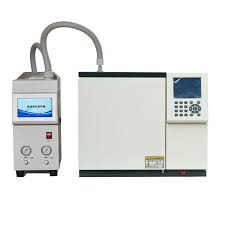
Analyzes and quantifies residual Ethylene Oxide (EO) using gas chromatography.
WhatsApp : +86 13816217984
Email : info@qinsun-lab.com

The Residual Ethylene Oxide Gas Chromatography System is a professional analytical instrument designed for the detection and quantification of residual ethylene oxide (EO) and its related compounds (ethylene chlorohydrin, ECH; ethylene glycol, EG) in medical products. It provides high sensitivity, accuracy, and compliance with international and national standards, ensuring the safety of sterilized medical devices and related products.
The system is suitable for the analysis of residual ethylene oxide in the following industries and products:
(1) Medical Device Industry: surgical instruments, catheters, syringes, implants, and other sterilized medical equipment — residual EO detection
(2) Pharmaceutical Industry: sterilized vials, ampoules, and packaging materials — EO residue quantification
(3) Hospital Sterilization Facilities: EO-sterilized medical consumables, hospital sterilization quality control — monitoring residual EO levels
(4) Quality Control Laboratories: medical product manufacturers, third-party testing labs — EO residue compliance testing
(5) Research and Development: development of new sterilization processes, optimization of EO sterilization protocols
(6) Regulatory Compliance Testing: submission of data for ISO, USP, Ph. Eur., JP, and national pharmacopoeial requirements
The instrument is compliant with and suitable for use with the following standards:
(1) ISO 10993-7:2021 – Biological evaluation of medical devices — Part 7: Ethylene oxide sterilization residuals
(2) United States Pharmacopeia (USP) – relevant chapters for chromatography and biocompatibility testing
(3) European Pharmacopoeia (Ph. Eur.) – e.g., 2.2.28 Gas Chromatography for sterilizing agent residues
(4) Japanese Pharmacopoeia (JP) – residual solvent and sterilizing agent testing methods
(5) National Standards – e.g., GB/T 16886.7 (China) for EO residual testing
(1) High Accuracy and Sensitivity: Detects trace levels of EO, ECH, and EG in ppm or µg/g ranges
(2) Compliance Assurance: Meets ISO 10993-7, USP, Ph. Eur., and other pharmacopoeial requirements
(3) Reliable Detection: Hydrogen Flame Ionization Detector (FID) ensures robust and consistent results
(4) Automated Sample Preparation: Optional headspace samplers improve reproducibility and operator safety
(5) Comprehensive Data Analysis: Advanced software provides chromatograms, quantitative results, and reporting
(6) Ensures Product Safety: Monitors residual toxins to protect patients and healthcare workers
(7) Modular Design: Six independent temperature-controlled zones, modular chambers for easy installation and replacement
(8) Precise EPC Electronic Flow Control: 18 gas channels independently controlled for flow and pressure
(9) Power-Off Protection: Automatic parameter memory and immunity to sudden power fluctuations
(10) Extensive Self-Diagnosis: Real-time fault detection with suggested solutions
(11) Fully Integrated Control Workstation: Three digital and three analog outputs for comprehensive control
| Item | Specification |
|---|---|
| Gas Flow Control | EPC electronic control, 18 independent channels |
| Injector | Up to 3 independently temperature-controlled injectors |
| Temperature Control Zones | 10 independent zones, including column, vaporization, FID, thermal conductivity, auxiliary 1 & 2 |
| Detector | Hydrogen Flame Ionization Detector (FID), high sensitivity |
| Power-Off Protection | Automatic parameter memorization, power fluctuation immunity |
| Self-Diagnosis | Real-time fault messages with solutions |
| Control Workstation | Fully integrated, 3 digital + 3 analog outputs |
| Safety | Automatic stop functions and modular design for easy replacement |
(1) Gas chromatograph column(s) suitable for EO/ECH/EG detection
(2) Headspace sampler (optional, automated)
(3) Injector liners and septa
(4) Hydrogen and air supply lines with regulators
(5) Data acquisition software with quantitative analysis module
(6) Calibration gas kits
(7) Operation manual
(8) Maintenance toolkit
(9) Power cable
(1) Prepare sample according to the target product type and standard requirements
(2) Load sample into headspace vial or GC injector system
(3) Configure the GC method parameters including temperature zones, flow rates, and detector settings
(4) Start automated or manual analysis
(5) Acquire chromatograms and record quantitative residual EO, ECH, and EG values
(6) Verify results against pharmacopoeial limits (ISO 10993-7, USP, Ph. Eur.)
(7) Clean injector, column, and sampling system after testing
(1) Regularly clean injector, column, and detector chambers
(2) Replace septa, liners, and GC columns as recommended
(3) Verify calibration with standard gases before each batch of testing
(4) Maintain gas supply lines and regulators for consistent flow
(5) Keep software, logs, and calibration records updated for compliance documentation
(6) Store instrument in a clean, dry laboratory environment
YouTube video introduction:https://www.youtube.com/watch?v=VvgeIciU_iA
YouTube video introduction:https://www.youtube.com/watch?v=YtrbEEKzN-A
Qinsun Instruments Co., LTD is a professional laboratory testing instrument manufacturer in China,Have been focusing on laboratory instrument R&D more than 30 years and have rich industry experience,Based on international testing standards,We are also the instrument supplier for BV SGS laboratory,We provide one-stop solutions for lab instruments,Free Training and Turn-Key Service,Products exported all over the world,Offer 36 month warranty and are a trustworthy partner.

Company Phone
+86-21-6420 0566
Working hours
Monday to Friday
Mobile phone:
13816217984
Email:
info@qinsun-lab.com